Pollinators provide an important service to humans and the ecosystem. They are critical to the survival of plants, animals, and humankind. The honeybee alone is responsible for pollinating more than a third of the food we eat. Most people are aware of the honeybee crisis, but honeybees aren’t the only ones in trouble. Other pollinators are in decline including butterflies, moths and native bees. The largest negative impact on pollinators is from habitat loss, habitat fragmentation and degradation, and pesticides. With the right knowledge and resources, even the smallest home garden can play a role in our efforts to maintain pollinator populations.
Insects are central to the health of natural communities. Insects that provide pollination services include flies, wasps, butterflies, moths, beetles, honeybees and native bees. A habitat garden for pollinators needs water, food in the form of nectar and pollen, and bare dirt without mulch for ground nesting native bees. All habitat gardens need to be pesticide-free.
Bees and Plants
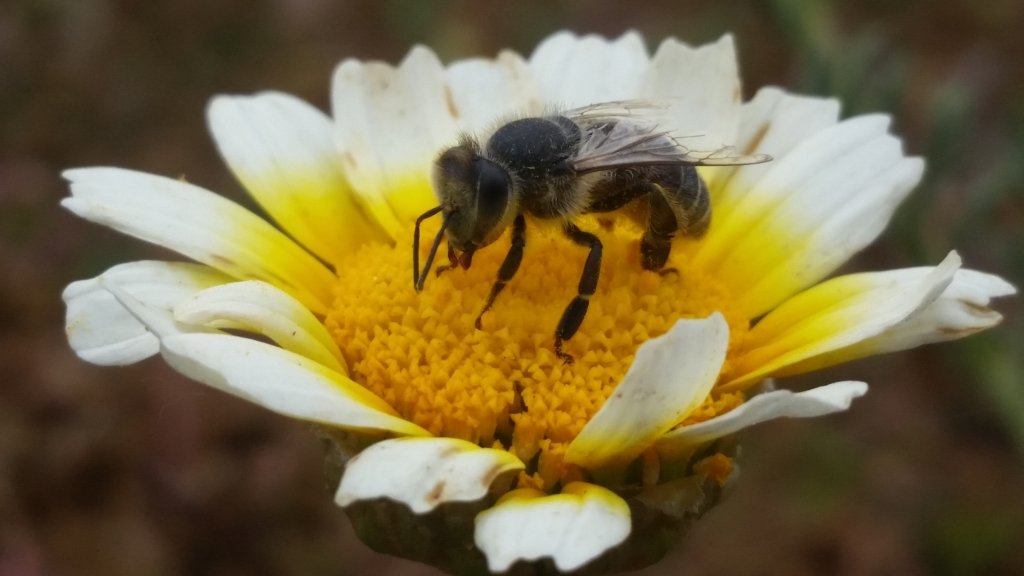
Tidytips (Layia platyglossa)
Diversity is key. Bees will go longer distances to find patches of flowers that are rich in species. Pollinators like both diversity and blocks of color. An ideal garden should include:
Local native plants – Research suggests native plants are four times more attractive to native bees than exotic flowers. In gardens, heirloom varieties of herbs and perennials can also provide good foraging.
Several colors of flowers – Flower colors that particularly attract bees are blue, purple, violet, white, and yellow.
Flowers planted in clumps – Flowers clustered into clumps of one species will attract more pollinators than individual plants scattered through the habitat patch. Where space allows, make the clumps four feet or more in diameter.
Flowers of different shapes & sizes – Bees are all different sizes, have different tongue lengths, and will feed on different shaped flowers. Consequently, providing a range of flower shapes and sizes means more bees can benefit.
A diversity of plants flowering all season – By having several plant species flowering at once, and a sequence of plant flowering through spring, summer, and fall, you can support a range of bee species that fly at different times of the season.
No pesticides.
Although various bees do like some exotic plants species, native plants should be your first choice. Native plants are equipped to live with the local climate, soil types, and animals. Plants and animals that have evolved together depend upon each other for survival. Native plants and animals form a complex ecosystem, an intricate web of life with each species’ life cycle highly dependent on the others. Native plants do a better job of providing food and shelter for native wild animals than do introduced plants. Native plants are the foundation of our natural ecosystems and protect biodiversity. Plus, native plants have developed their own natural defenses against many pests and diseases, requiring less pesticide use. Reducing or eliminating the use of pesticides keeps these toxins out of our watersheds.
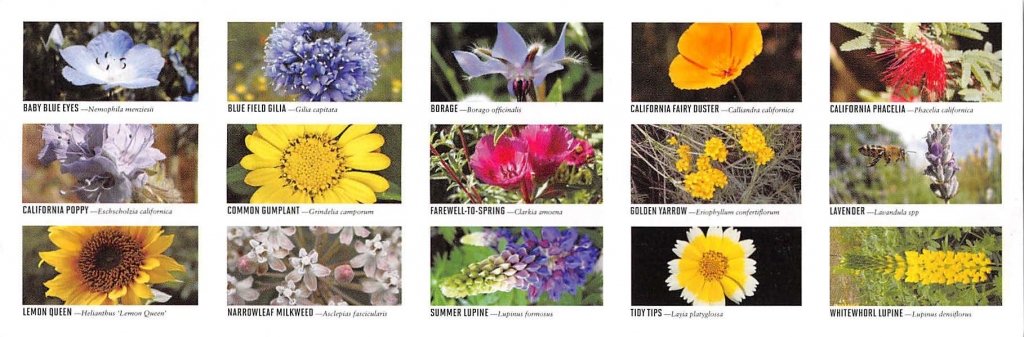
Of the many California native plants to choose, here is a list of a few that are especially attractive to bees:
Birds Eye Gilia (Gilia tricolor)
Blazing Star (Mentzelia lindleyi)
California Aster (Aster chilensis)
California Bluebell (Phacelia minor)
California Buckwheat (Eriogonum fasciculatum)
California Gilia, Blue Gilia (Gilia achilleifolia)
Rosy or Red Buckwheat, San Miguel Island Buckwheat (Eriogonum grande var. rubescens)
Slender Sunflower (Helianthus gracilentus)
Sneezeweed (Helenium puberulum)
Sunflower and cultivars (Helianthus annuus and H. annuus cultivars)
Tansy Phacelia (Phacelia tanacetifolia)
Tidytips (Layia platyglossa)
Toyon (Heteromeles arbutifolia)
Western Redbud (Cercis occidentalis)
Wild Lilac (Ceanothus ‘YankeePoint’)
Woolly Blue Curls (Trichostema lanatum)
This short list of bee-friendly native plants is just a sample of the diversity of native plants available to the home gardener. When you grow them, you can be sure you are helping bees, other types of pollinators, and the environment in general. Also check out our post on how to grow a bee-friendly garden on a budget.
About the Author
This author has not added a biography. Meanwhile has contributed 212 posts.
Click here
to view them.